
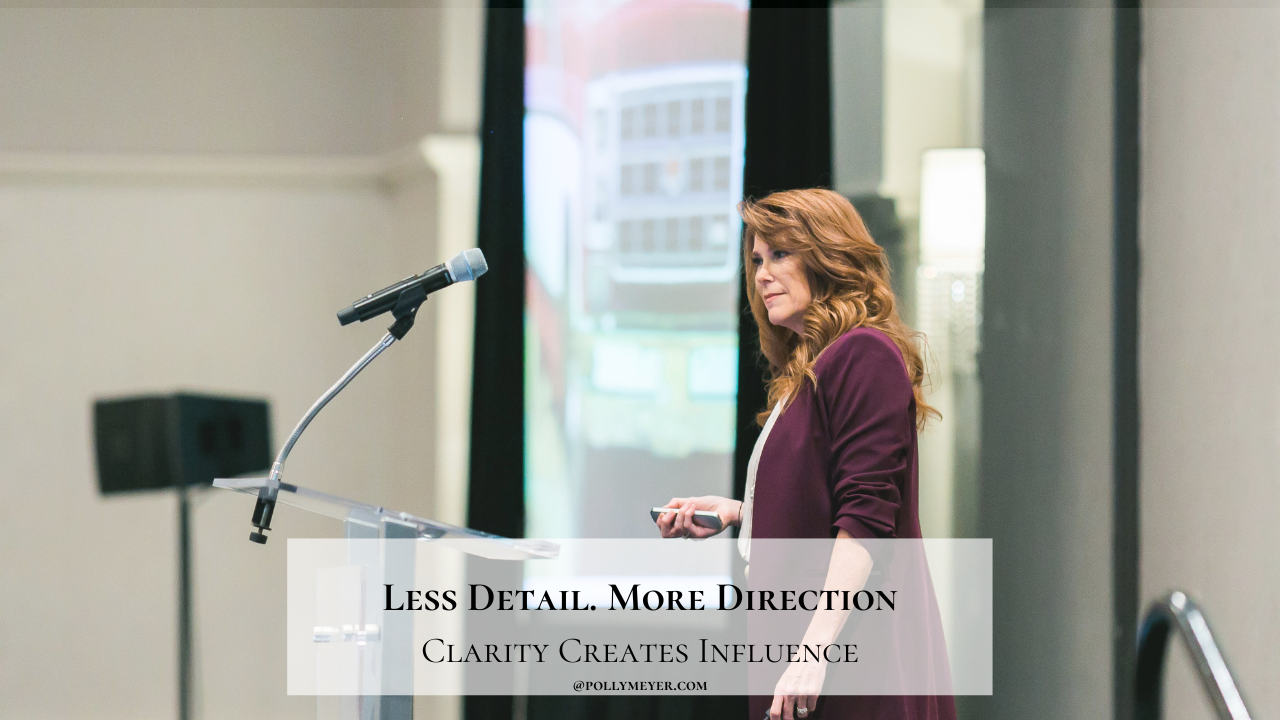
Less Detail. More Direction.
One of the patterns I see with highly capable people is that they often confuse credibility with completeness. They walk into the room wanting to show the full picture, the backstory, the complexity, the nuance, the risks, the research, and every reason they arrived where they did.
And I understand that instinct. When you care about the work, you want people to know you have thought it through. You want them to see that you are not being careless. You want them to trust the depth behind the recommendation.
But at a certain level, the room does not need everything you know. It needs the point you are willing to stand behind.
I’ve watched executives lose the strength of a message because they kept adding more to it. Not because the information was wrong, but because the point became harder to find. And once the room has to work too hard to locate the meaning, your influence starts to soften.
The shift is learning to lead with judgment. My simple framework is this: say where you stand, say why it matters, then offer the details only if they serve the conversation. That keeps the message clear without making it shallow.
The distinction is important. Concise does not mean underprepared. Often, it means you have done the harder work of deciding what matters most.
If your communication has been feeling too dense, too detailed, or too difficult for people to follow, this is exactly the kind of strategic communication work I help clients refine. You can reach out directly or learn more at pollymeyer.com.
