Set The Intention - Intention Changes Presence
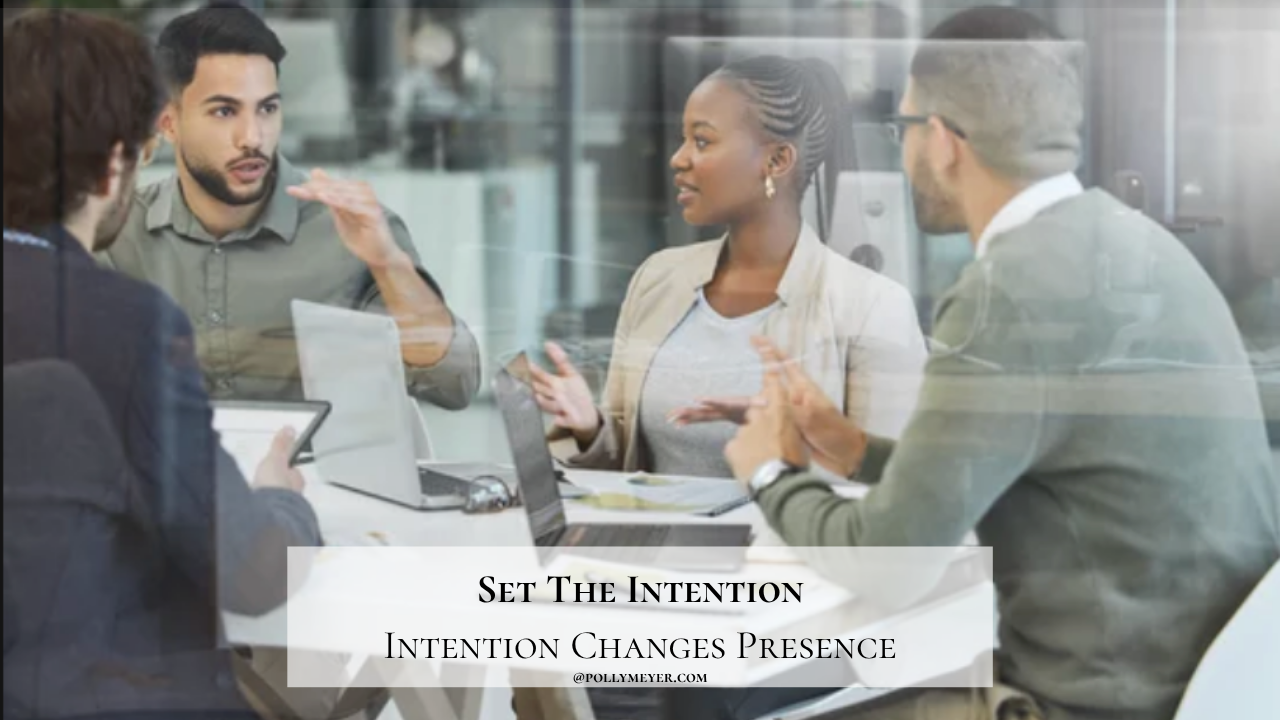
Before an important meeting, most people prepare the content. They review the slides, check the numbers, rehearse the update, and make sure they know what they want to say. That matters, of course. But there is another kind of preparation that is just as important, and it often gets skipped.
Name the conversation before you enter it. Is this a decision conversation? Is it an alignment conversation? Is it a repair conversation? Is it a visibility moment? Is it a trust-building moment? Is it a moment where people need clarity, reassurance, direction, or courage? Those are very different rooms, and they require different versions of your presence.
I’ve seen smart professionals walk into a meeting thinking they were there to give an update, when the room was actually looking for a recommendation. I’ve seen executives prepare to defend a point when the moment really required listening. I’ve seen candidates come ready with information when the audience needed conviction. The realization is...
Less Detail. More Direction.
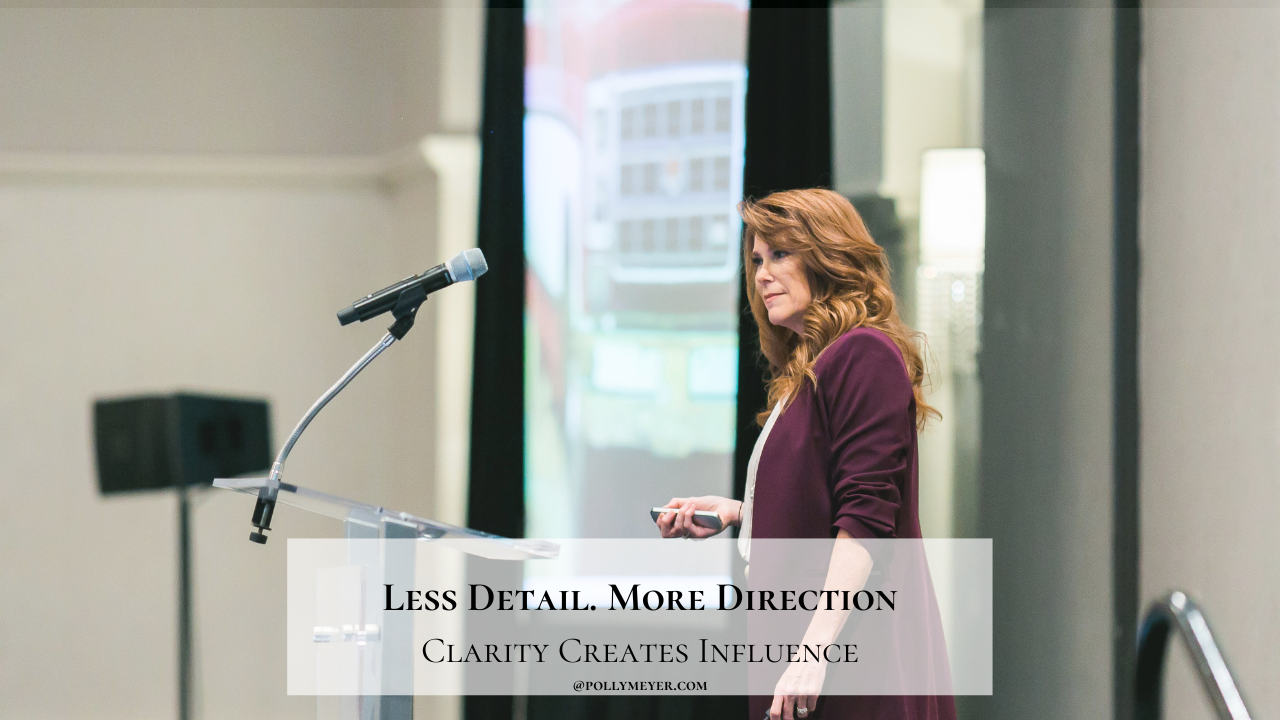
One of the patterns I see with highly capable people is that they often confuse credibility with completeness. They walk into the room wanting to show the full picture, the backstory, the complexity, the nuance, the risks, the research, and every reason they arrived where they did.
And I understand that instinct. When you care about the work, you want people to know you have thought it through. You want them to see that you are not being careless. You want them to trust the depth behind the recommendation.
But at a certain level, the room does not need everything you know. It needs the point you are willing to stand behind.
I’ve watched executives lose the strength of a message because they kept adding more to it. Not because the information was wrong, but because the point became harder to find. And once the room has to work too hard to locate the meaning, your influence starts to soften.
The shift is learning to lead with judgment. My simple framework is this: say where you stand, say ...
When Preparation Becomes Pressure - Practice should give your presence back
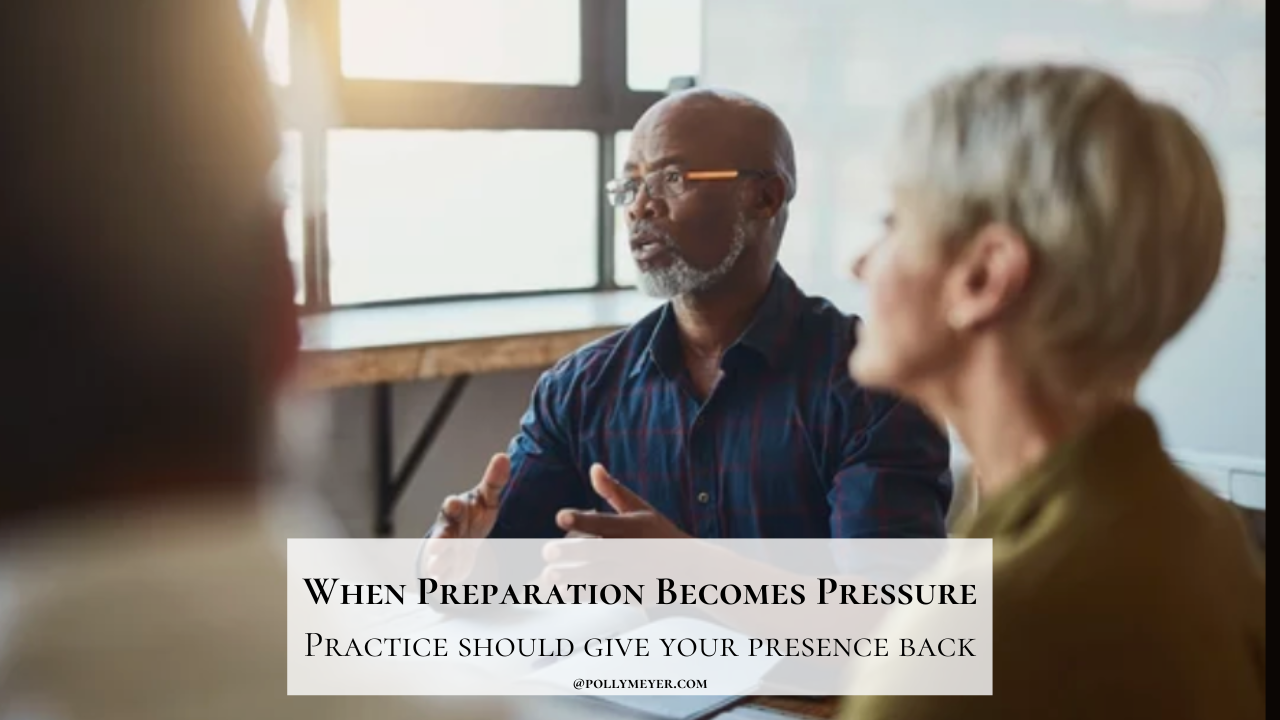
I’ve been thinking about how easy it is for high-performing people to confuse preparation with pressure.
I understand this one deeply because preparation matters in my world. I believe in practice. I believe in rehearsal. I believe in walking into a room having done the work.
But there is a point where preparation stops supporting you and starts tightening you.
You can feel the difference.
Supportive preparation gives you structure, language, confidence, and room to breathe. Pressure-based preparation makes you want to control every sentence, anticipate every reaction, and get everything exactly right.
That second kind of preparation can make someone sound less like themselves.
I see this often before presentations, interviews, investor conversations, and high-visibility meetings. The person has done the work, but the work has made them tense instead of free.
So I often ask: are we preparing to control the moment, or are we preparing to be available inside the moment?
That ques...
Land Before You Lead - Authority Starts In The Body

I was working with a senior executive who knew the material cold. She had the numbers, the strategy, the examples, and the answers. On paper, she was more than prepared.
But when she walked into high-stakes conversations, something changed. Her voice got a little smaller. Her pace got quicker. She started over-explaining, not because she didn’t know what she was talking about, but because she wanted the room to feel certain.
And that was the shift.
You cannot always talk your way into authority. Sometimes you have to settle into it first.
So we worked on a simple framework: land, lead, then explain. Land in your body. Lead with the main point. Then explain only what serves the decision, the audience, or the moment.
That one adjustment changed everything. She sounded less like she was trying to prove she belonged and more like someone who trusted the value of what she was there to say.
This is such an important distinction for executives, founders, and high-performing professional...
Influence Begins Before the Meeting
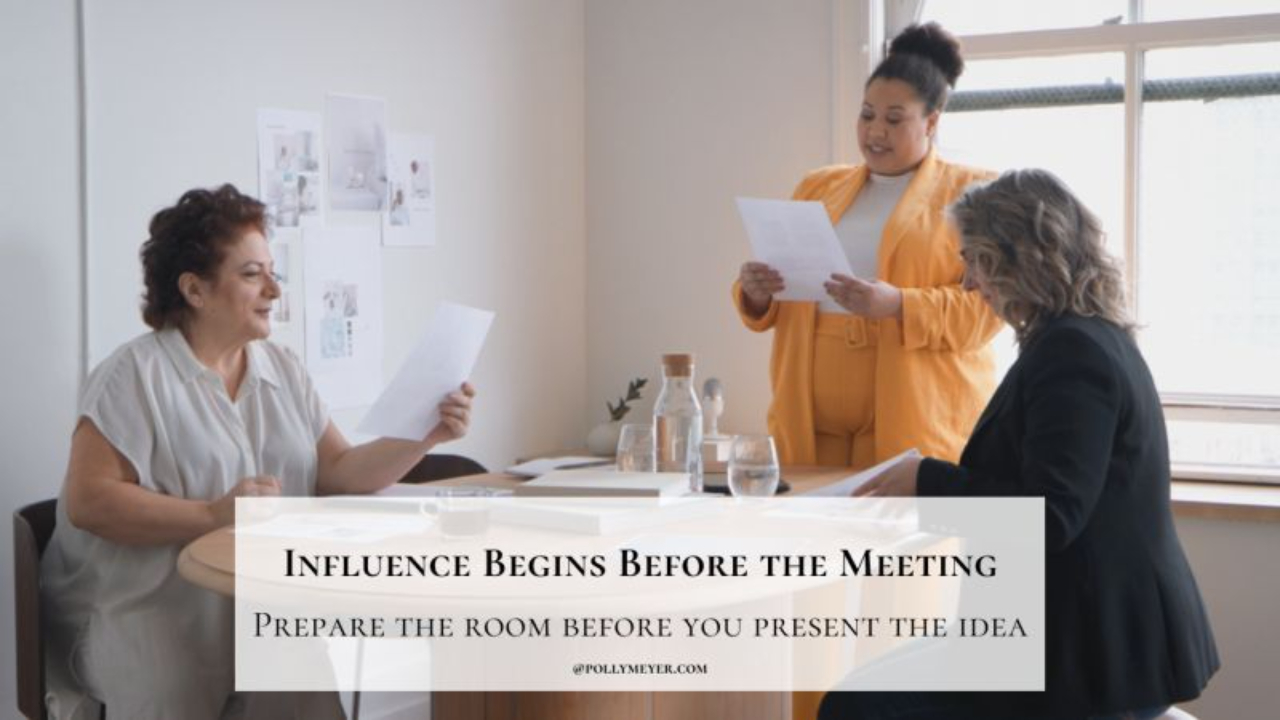
I once worked with a senior leader who was carrying a really important idea. It was strategic, thoughtful, and potentially game-changing for the organization. On paper, the case was strong. The numbers made sense. The opportunity was clear. But every time she brought it forward, it didn’t quite move.
And that is such a frustrating place for a capable leader to be, because you can start to wonder, “Am I not explaining this well enough?” or “Do they not see what I see?” But when we slowed everything down, the real issue was not the quality of the idea. The issue was that she was trying to win the room inside the meeting, and by then, the room was not ready to be won.
That was the shift.
Influence often begins long before the official conversation. It starts in the smaller conversations before the meeting, the trust you build with the people who matter, the questions you answer early, and the champions you develop before the idea is formally on the table.
So we created what I call an influenc...
The Difference Between A Good Coaching Session and A Session That Actually Changes You
I can usually tell in the first few minutes of a coaching session how much traction we are going to get that day.
Not because of the person’s title. Not because of how polished they sound. Not because of how much experience they have.
I can tell by whether they came prepared to do the work.
The leaders who get the most out of coaching walk in with something real. A meeting that didn’t land. A conversation they are avoiding. Feedback they are still trying to understand. A presentation that feels scattered. A moment coming up where they know the room needs more from them.
They don’t hand me the wheel and say, “What should we talk about today?”
They arrive with material.
And that changes everything.
I remember working with a leader who had a lot of responsibility on their shoulders and a lot of complexity around them. The sessions that moved fastest were the ones where they came in and said, “Here’s what happened. Here’s what I tried. Here’s where I got stuck.”
Now we had something to work with. ...
Navigating Crucial Moments: How Executive Coaches Empower Leaders to Shine

In the high-stakes environment of corporate leadership, every decision and action can have a profound impact. Executive coaches play a crucial role in guiding leaders to present the best version of themselves during make-or-break moments, ensuring they navigate these situations with confidence and poise. Here are five ways a coach can help you prepare for those make-or-break moments:
1. Enhancing Self-Presentation:
Executive coaches work with leaders to refine their communication skills, body language, and overall demeanor. This enables leaders to convey their thoughts and ideas effectively, build rapport, and establish a strong presence in crucial situations.
2. Building Emotional Intelligence:
Coaches help leaders develop emotional intelligence, allowing them to manage their emotions, understand others’ feelings, and respond appropriately in high-pressure scenarios. This fosters positive interactions and enhances leaders’ ability to influence and inspire.
3. Sharpening Decision-Maki...
Beyond Burnout: A Leader's Overview of Self-Care Essentials

Self-Care: The Unspoken Game-Changer for Today's Leaders
In today’s fast-paced business world, where burnout is more common than coffee breaks, self-care isn’t just nice to have, it’s essential. In 2023, a staggering 97% of Americans recognized the importance of self-care, yet more than half felt the pangs of burnout. As a leader, you might resonate with this.
When Self-Care Becomes Personal
Imagine this: It's been a relentless day; challenges haven't stopped coming at you, and you're nearly at your limit. In moments like these, do you opt for a quick fix or a reliable, long-term strategy? I must admit, there are evenings where I unwind with a glass of wine and dive into a series marathon on Netflix or lose myself in the endless scroll of social media. But the distraction is fleeting, leaving a void where there should be replenishment. These are impulsive responses to stress, not the thoughtful habits that build resilience and genuine contentment.
Redefining Self-Care
True self-ca...
Negativity: The Quickest Way to Fail as a Project Manager

In the realm of project management, there lies a profound opportunity, one that resonates deeply with my philosophy: the chance to inspire and motivate your team.
Picture the incredible potential that resides within each member of your team. It's in understanding their innate strengths and providing feedback in a constructive and compassionate manner that you can ignite an unyielding belief in their capabilities.
Your role isn't just about managing projects; it's about cultivating a culture of perpetual development that urges your team to embrace challenges, undertake calculated risks, and relentlessly evolve.
Identify strengths: Take the time to delve into the unique strengths and skills of each member on your team. Recognize and honor their distinctive contributions and capabilities.
Offer constructive feedback: Be the kind of leader who delivers feedback that's not only specific and actionable but also delivered with a deep sense of empathy.
Concentrate on their strengths while...
Elevating Your Leadership: The Unfair Advantage of an Executive Coach