
Set The Intention - Intention Changes Presence
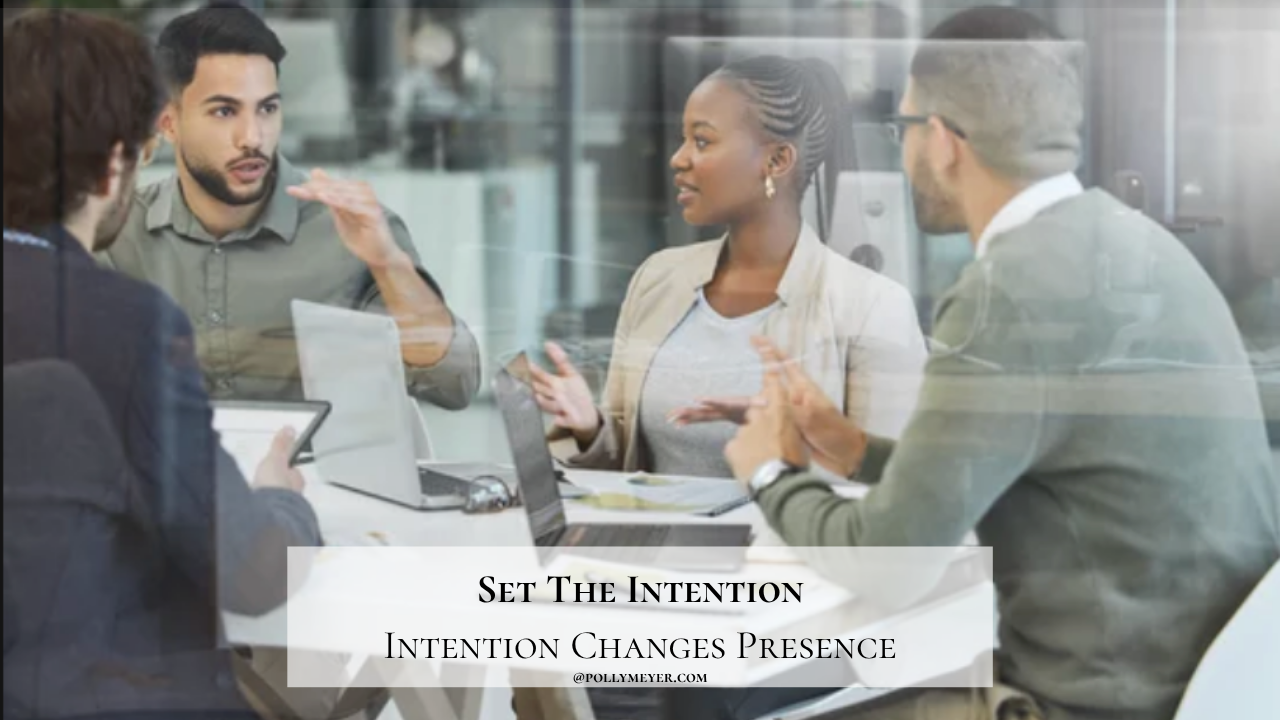
Before an important meeting, most people prepare the content. They review the slides, check the numbers, rehearse the update, and make sure they know what they want to say. That matters, of course. But there is another kind of preparation that is just as important, and it often gets skipped.
Name the conversation before you enter it. Is this a decision conversation? Is it an alignment conversation? Is it a repair conversation? Is it a visibility moment? Is it a trust-building moment? Is it a moment where people need clarity, reassurance, direction, or courage? Those are very different rooms, and they require different versions of your presence.
I’ve seen smart professionals walk into a meeting thinking they were there to give an update, when the room was actually looking for a recommendation. I’ve seen executives prepare to defend a point when the moment really required listening. I’ve seen candidates come ready with information when the audience needed conviction. The realization is...
Less Detail. More Direction.
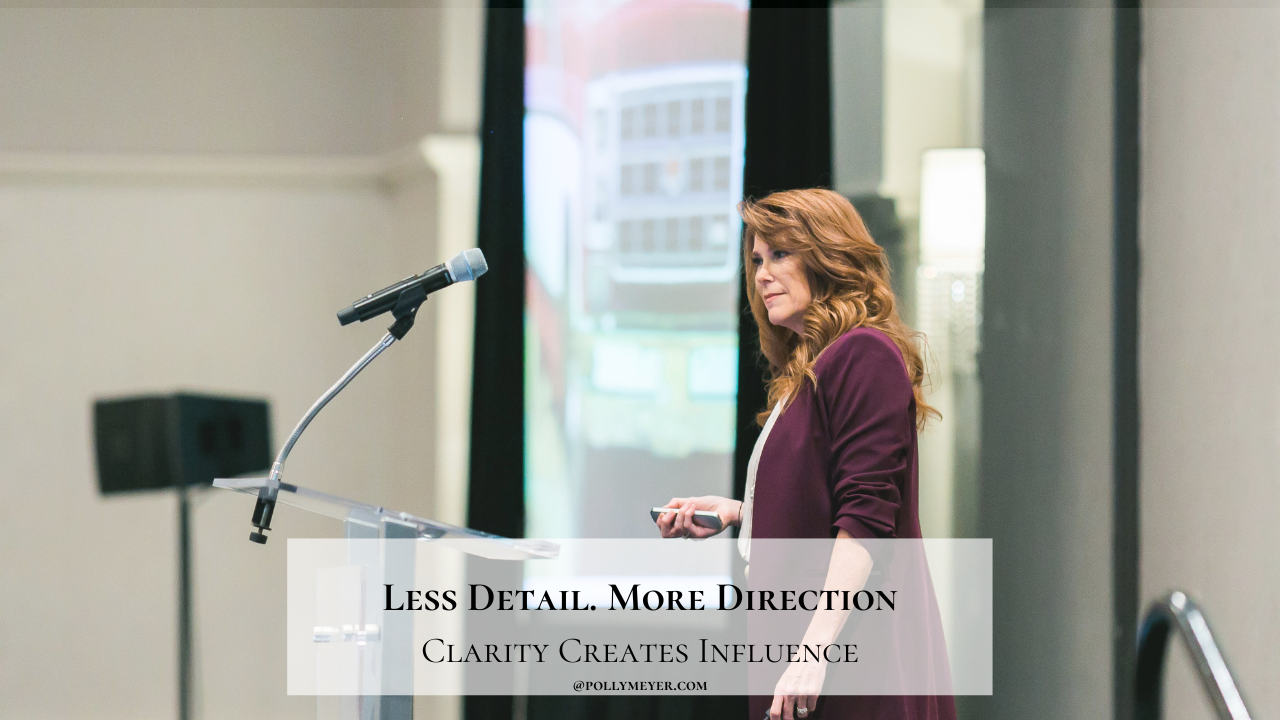
One of the patterns I see with highly capable people is that they often confuse credibility with completeness. They walk into the room wanting to show the full picture, the backstory, the complexity, the nuance, the risks, the research, and every reason they arrived where they did.
And I understand that instinct. When you care about the work, you want people to know you have thought it through. You want them to see that you are not being careless. You want them to trust the depth behind the recommendation.
But at a certain level, the room does not need everything you know. It needs the point you are willing to stand behind.
I’ve watched executives lose the strength of a message because they kept adding more to it. Not because the information was wrong, but because the point became harder to find. And once the room has to work too hard to locate the meaning, your influence starts to soften.
The shift is learning to lead with judgment. My simple framework is this: say where you stand, say ...
When Preparation Becomes Pressure - Practice should give your presence back
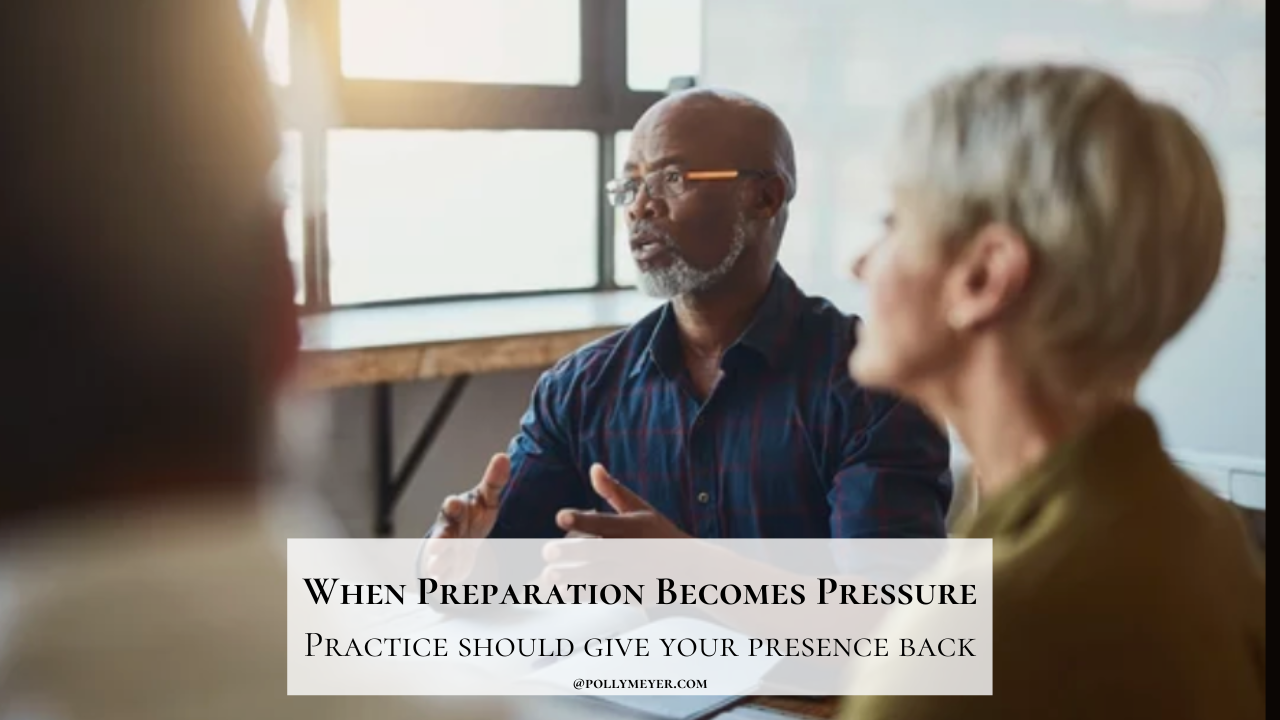
I’ve been thinking about how easy it is for high-performing people to confuse preparation with pressure.
I understand this one deeply because preparation matters in my world. I believe in practice. I believe in rehearsal. I believe in walking into a room having done the work.
But there is a point where preparation stops supporting you and starts tightening you.
You can feel the difference.
Supportive preparation gives you structure, language, confidence, and room to breathe. Pressure-based preparation makes you want to control every sentence, anticipate every reaction, and get everything exactly right.
That second kind of preparation can make someone sound less like themselves.
I see this often before presentations, interviews, investor conversations, and high-visibility meetings. The person has done the work, but the work has made them tense instead of free.
So I often ask: are we preparing to control the moment, or are we preparing to be available inside the moment?
That ques...
Urgent Is Not Always Important
I’ve worked with senior decision-makers who are doing everything “right” from the outside. They are responsive, available, thoughtful, and deeply invested in their people and the work. But underneath all of that competence, there is often a quiet exhaustion because every day is being shaped by what feels urgent.
The calendar is full. The inbox is loud. People need answers. Decisions are waiting. And before they know it, the work that actually requires their best thinking keeps getting pushed to the edges of the day.
I saw this with a client who was trying to hold the organization, the team, and the long-term vision all at once. She had plenty of capability. What she didn’t have was enough protected space to lead from the future instead of constantly reacting to the present.
The realization was not that she needed to work harder. She needed to change what was allowed to govern her attention.
So we used a very simple reset: what needs my response, what needs my leadership, and what n...
