Land Before You Lead - Authority Starts In The Body

I was working with a senior executive who knew the material cold. She had the numbers, the strategy, the examples, and the answers. On paper, she was more than prepared.
But when she walked into high-stakes conversations, something changed. Her voice got a little smaller. Her pace got quicker. She started over-explaining, not because she didn’t know what she was talking about, but because she wanted the room to feel certain.
And that was the shift.
You cannot always talk your way into authority. Sometimes you have to settle into it first.
So we worked on a simple framework: land, lead, then explain. Land in your body. Lead with the main point. Then explain only what serves the decision, the audience, or the moment.
That one adjustment changed everything. She sounded less like she was trying to prove she belonged and more like someone who trusted the value of what she was there to say.
This is such an important distinction for executives, founders, and high-performing professional...
Influence Begins Before the Meeting
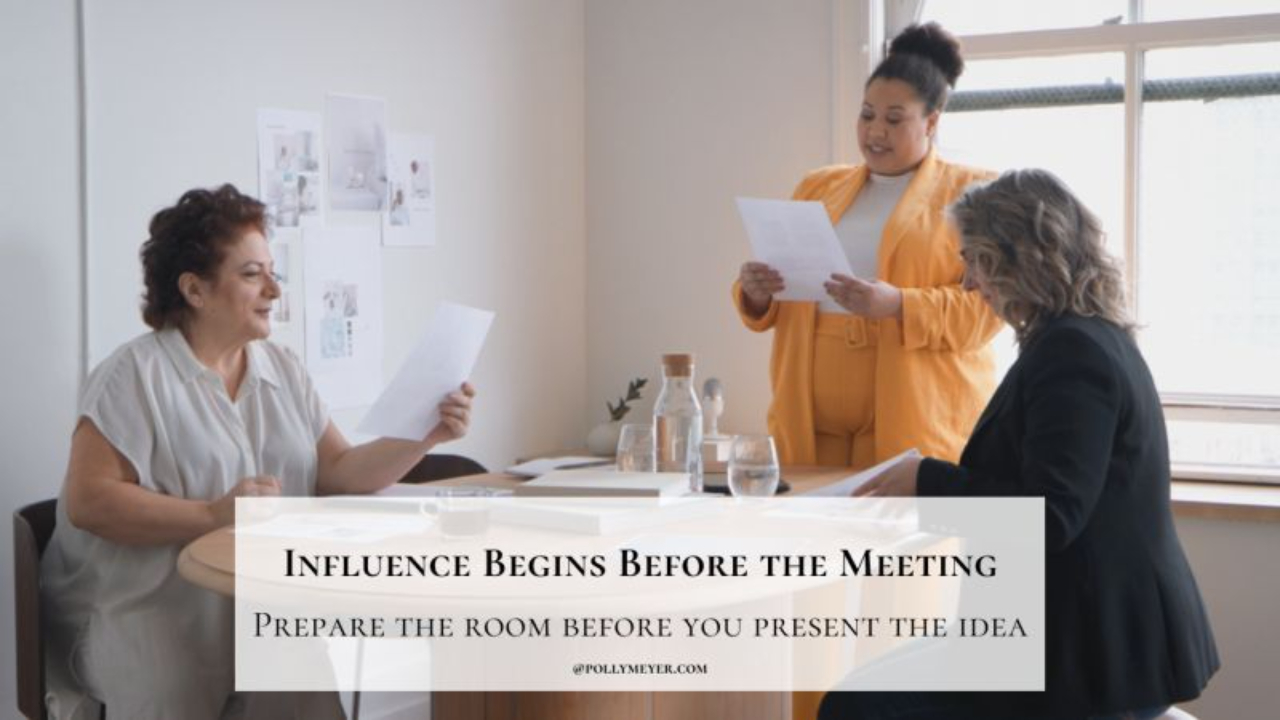
I once worked with a senior leader who was carrying a really important idea. It was strategic, thoughtful, and potentially game-changing for the organization. On paper, the case was strong. The numbers made sense. The opportunity was clear. But every time she brought it forward, it didn’t quite move.
And that is such a frustrating place for a capable leader to be, because you can start to wonder, “Am I not explaining this well enough?” or “Do they not see what I see?” But when we slowed everything down, the real issue was not the quality of the idea. The issue was that she was trying to win the room inside the meeting, and by then, the room was not ready to be won.
That was the shift.
Influence often begins long before the official conversation. It starts in the smaller conversations before the meeting, the trust you build with the people who matter, the questions you answer early, and the champions you develop before the idea is formally on the table.
So we created what I call an influenc...
Navigating Crucial Moments: How Executive Coaches Empower Leaders to Shine

In the high-stakes environment of corporate leadership, every decision and action can have a profound impact. Executive coaches play a crucial role in guiding leaders to present the best version of themselves during make-or-break moments, ensuring they navigate these situations with confidence and poise. Here are five ways a coach can help you prepare for those make-or-break moments:
1. Enhancing Self-Presentation:
Executive coaches work with leaders to refine their communication skills, body language, and overall demeanor. This enables leaders to convey their thoughts and ideas effectively, build rapport, and establish a strong presence in crucial situations.
2. Building Emotional Intelligence:
Coaches help leaders develop emotional intelligence, allowing them to manage their emotions, understand others’ feelings, and respond appropriately in high-pressure scenarios. This fosters positive interactions and enhances leaders’ ability to influence and inspire.
3. Sharpening Decision-Maki...
Elevating Your Leadership: The Unfair Advantage of an Executive Coach